
When our truck was built (see Truck build progress) one of the things they added was a “house” battery, primarily to run the fridge.
It’s a 100Ah LiFePO4 unit with a Redarc DC-DC charger so that it’s charged from the truck battery while driving, but cannot drain the truck while stopped.
The basic config of the two batteries and the controller is as below:
Truck Battery --> FUSE --> Redarc --> FUSE --> House Battery
The two fuses used were both in-line blade fuse holders, of the style commonly available in all sorts of places, with 60A fuses (see typical pic below, Fig 1).
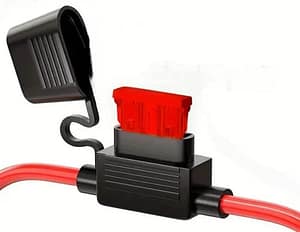
Now, merely three years on, we’ve had to replace both of the fuse holders; not because the fuses blew but because the holders themselves have failed catastrophically.
The first one, between the truck battery and controller failed about twelve months ago; signified by a cloud of evil-smelling black smoke coming out from the battery compartment beside the passenger seat. Fortunately we could pull over quickly and extinguish the flames with an old cloth without any damage to the truck battery, wiring or compartment.
Just within the last couple of weeks the second one—between the controller and house battery—also failed, although not so spectacularly as the first (which we’re quite thankful for as it was located under the rear seat!). Picture of that failed holder below as Fig 2. The fuse element itself is still intact, with end-to-end continuity.
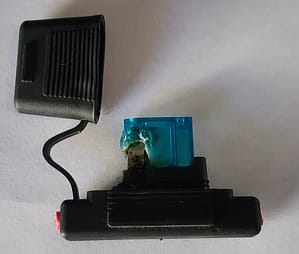
Our (myself and my good mate Richard’s1) considered opinion is that the “robust” ride of the truck led to a reduction in contact between the holder and blade fuse itself, with a commensurate increase in resistance and hence heat at that join point; to such a degree that the holder and body of the fuse itself have melted.
So, where to from here?
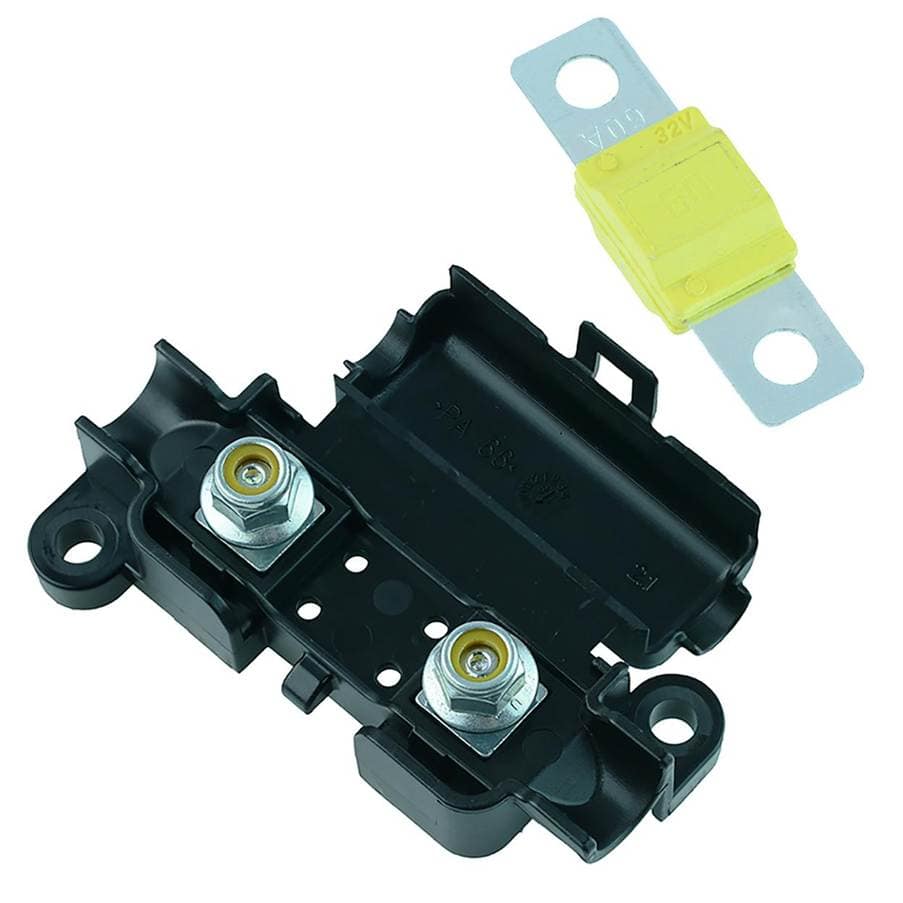
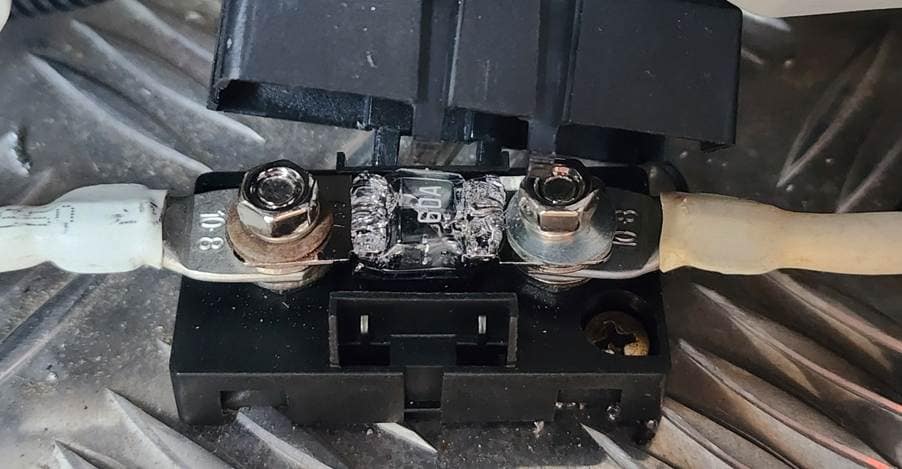
Having had my suspicions about exactly this—without necessarily the direct objective evidence—after the first fuse failed, I replaced it with a rather more robust style. The MIDI fuse is a compact bolt-down format that eliminates possible contact weakening, see Fig 3 for a typical unit and Fig 4 for one installed. I have now replaced the second failed blade fuse with a MIDI one also.
I can only conclude that it is very hard to recommend blade fuses in such a situation. They obviously can and do exist and work successfully in motor vehicles, as the vast majority of vehicle fuses are of the blade type, albeit in mini or micro form-factors. Perhaps the combination of the larger, heavier blade AND not having the holder firmly affixed to the vehicle chassis has contributed to the failures. I guess we can’t know for sure; but I will certainly think very carefully about using them in future.