Tapping the blues for a nip

SA fishermen are being asked to devise ways of tapping our blue crabs resource on a commercial scale.

Research suggests that large reserves can be exploited without affecting the viability of the species.

Certainly I have never met a blue crab with a large reserve; blue crabs are outgoing, particularly on the receding tide.

So this call for commercialisation and mechanisation is likely to be resisted tooth and claw by us old crabbers of the northern beaches.

Certainly we are likely to wade into any system that will deprive us of the last chance of peacetime hand-to-hand combat outside the bargain sale and the smorgasbord.

Crabbing is an expedition, a marathon of the mud flat and mangrove; person against the hostile environment.

We meet the crab on its home ground, the treacherous territory of the tidal sea.

We do not skulk echo-soundered and Esky-pampered upon some four-berth fishing layabout.

We are there in the thick of it with nothing between us and the maddened bluey but a broom. handle and a hoop of rusty chicken wire.

Even on a summer day there’s a nip in the air on the mud flats; the scream of the weaklings bringing a faint grin to the sunburn of the old leather lipped campaigners whose vintage shoes have squelched their foot prints in the salty sands of tidal time.

We know the dangers heaving our spare tyres over a St. Kilda flat; that awful occupational hazard of crabbing—shellgrit foot.

Crabbing is an individual contest not to be vulgarly commercialised.

One is alone out there, hauling one’s old tub behind and her shrieking every step of the way.

Some people are up the creek in crabbing.

Yet what is there to compare with triumphantly humping your bluey across the outer reaches of Middle Beach, the finger-like chimneys of Torrens Island smoking quietly into the azure morning, the receding tide chuckling among the weed, the cockles burping soft protests as the sea draws back its covers from their bed.

One heads across the primeval ooze, waving one’s crab net and shouting primeval statements.

There’s the instinct of the hunter, the nostrils flaring while herons, long-stilted, beak delicacies from the weed, with everywhere the wading birds and some of them very pretty in their sunsuits.

This is the rapture that the crabber knows.

If crabbing is reduced to mere remote control, what is there left?

This season we have al- ready been preparing, sorting out our old sandshoes and practising at the nets.


Max Fatchen

Out on a limb over technology

The news that SA will soon plug into satellite technology to monitor the environmental resources and vegetation of the State has sent a thrill of expectancy through our publicity-mad household.

My wife said that the whole complicated apparatus up there would be focusing not on missile silos, the wakes of prowling warships but upon the ecological maze of overgrown wilderness that is the spring rapture of our garden.

I was lying under the orange tree letting the maddening scent of the blossoms drift down to my reflective nostrils when she came thundering through the under- growth sending the snails fleeing in panic- stricken ooze and the thrip thripping for cover.

“Join me under the orange bough, my love,” I said through lazy, sensual lips, “Remember you wore the orange blossom in your wedding veil and I stood there as magnificent as a mandarin?”

Torn between her sentimentality and her inclination to strike me briskly with a rake, she said: “Do you know the satellite could be photographing us right now, that soon people may be poring over the picture and we could be surrounded by pest controllers, weed examiners and jungle warfare experts? Look at the garden. What do you see?”

I saw the crab apple shyly blooming. I saw the quince tree flouncing her skirt of blossoms to the prying breeze.

I saw the little oak tree putting on fresh leaves, like its old ancestors that had hulled English ships and opened branches for Robin Hood.

I saw the hawthorn and the tunnels of cool chaos where blackbirds soireed; and the old gums above with a galah, crest up, shrieking in the tops’ls of the trees.

“Well?” she said.

“There is no spring in space,” I said, “There is no pollen to stream the eyes and irrigate the nose. Can the satellite see a bee dreaming through the air, a golden orb above a beckoning rose.?”

I told her that she had used this ugly manifestation of 20th-century technology to drive me into activity. That we were all prisoners of surveillance. That I resented an overview of my garden. That’s what I told her.

She teed up my nose with the end of the rake and began practising her backswing.

I wondered, I said, showing unusual courage and monumental sloth, if the satellite could see my almond blossoms? Or hear the rufous whistler warbling. Or see the quick strut of crested pigeons, wearing little burnished collars.

But there is no spring in space, No women wearing old straw hats and sloppy slacks appear around the comer of an antennae to quicken the heart of the dreaming male up there.

“For goodness sake do up the front of your old gardening trousers,” she said, “And I want you to know I view your philosophising with the gravest suspicion.”

“I suspect that you are nothing but a lethargic ratbag. Nevertheless, I will bring out a cup of tea and we’ll discuss it like civilised people.”

“Get thee to a bunnery, my Ophelia,” I said, “And don’t stint the butter. Meanwhile I will press an orange blossom between my soft, office hands and we’ll remember auld lang syne.”

She tripped away with her rake, while beetles moved on the sun-dappled ground, honeyeaters pried with sweet beaks in the blossoms and Australian shrubs waltzed to a 10-knot Keith Martyn breeze.

But I did up the front of my old garden pants.

You never know when a satellite is looking!


Max Fatchen

If you’ve got buns, I’ve got dough

Ever since Billy Bunter showed a decided liking for them and his figure showed a decided tendency after them, buns have been regarded as a soft option by dietary hard-liners.

“Buns.” they shriek and go into culinary shock.

Yet this doughy darling of childhood still penetrates the more sophisticated gullets of maturity.

All over the world there are people longing for a bash at buns.

People are always promoting something in this competitive society. Yet bun promotion has reached a stalemate. And. even if they are stale, mate, you can always freshen them up in the oven.

Already the word bunfight is part of the language, indicating a culinary donnybrook or a festival of greed.

The mob has certainly put the finger on buns!

I like to ask for a bun when I’m dining, just to see the waiter’s look of cultured horror, to feel the electric stillness of the tables next to me. I know that petrified people are sitting with forks and knives frozen, with belief suspended. This kind of caper belongs at the quick-lunch counter. The fellow should be ejected.

But the truth is, they all want one. They are frustrated bun fanciers, the kind who rush to a bun counter, knowing full well there is no counter to a bun.

I know people who have driven kilometres looking for a country bakery, their nostrils flaring for the first scent of that approaching ecstasy.

They fall out of their cars in a screaming mob, rushing into the shop, tossed hither and thither by the currants of their greed.

Yet the bakery at bun time is an exercise in nostalgia for me. In my youth, while others were stoning sparrows or encountering girls. I would race to the local bakery and slam my passionate pence on the counter clasping the new buns with all the rapture of one feeling the sensuous, still-warm flesh.

I would sit up a nearby creek, the one I was continually associated with in later demanding years, savouring each floury crumb and the faint granular deposits of their sugared summits. Birds waited hopefully on near- by boughs but there was nought for their comfort.

Other children saved pennies in school banks and lived virtuously on cheese sandwiches.

Did you bank your money today, dear?

Well, you might say I invested it with an eye to the growth factor.

I promised I would forgo buns but of course I only gave lip service to their pleading.

I still notice things. For instance, the techniques of eating the modern cream bun lack the bold, straightforward method we used.

People timidly separate the bun’s halves, demurely eating the cream and jam filling by instalments instead of the glorious, head-on, engagement. with the white cream spraying past the ears!


Max Fatchen

The yellow peril

Welcome to Chutney Junction.

Draw yourself up a stewpan and we’ll boll you with raisins.

For this [is an] apricot chutney, the golden tide from a tree of plenty.

Spread it on your stomach and put yourself between a couple of slices of bread.

This can be your scene, too.

Oh the wild, dangerous kitchen cacophony of clashing bottles, oh the stirring spoons and lurid bubbles, the lava-like overflow from the saucepans, hot-footing it after our Argentine ants.

There are people among this bedlam; wild-eyed, apricot coloured people. They’ll put you in a bottle and dab a label on you. Do not open until March

Some of us are even married to them.

One was on the phone just now.

“I’m on the next batch,” she said. Her voice was steamy.

My phone vibrated like a jet engine.

“Thar she blows,” she screamed. And then silence. But not quite.

A bubbling, hissing, unspeakable background noise.

What had happened, I asked myself, in this suburban Rotorua. Had final lava-like avalanche of chutney flushed away the kitchen furniture into molten oblivion.

Would I go home to a chutney crater where once my five-roomed house with the paint-shy sleepout. had stood, sleeping peacefully among its white ants and blackbirds with the mortgage moss-gathering in sleepy instalments under the shady eaves?

It all goes back a long way, to the planting of the apricot tree. We were young then, the worry lines but a faint hint on our fresh young skins.

Plant apricot trees, someone had told my wife. They bear well, they said.

Our apricot tree has borne well. In fact, it has borne everything before it. It has become a fecund medusa, casting spells, trapping us in the relentless cycle of its fruiting season. Hundreds have tramped and clambered around it, trying to denude its branches, only to withdraw pale and defeated into their own sullen chutney making.

Several times I’ve taken an axe to the tree. But an inner voice has said: this is beneficent Nature spreading her largesse. Be thankful. Be grateful. And I’ve weakened sobbing against the tree’s trunk as the chutney-coloured sunset blazed in the west.

When it comes to apricots, I know I’m yellow.

And sooner or later you get hooked on chutney making.

People form chutney associations and have chutney tastings. No more elegant sauces, no more sandwich relish, no more commercial condiments.

The whole year becomes a yellow haze of chutney. One races against time consuming it. For the tree will be fruiting again, it already looks pregnant. And the stewpan moves uneasily in the cupboard.

Now people have taken to visiting us outside the chutney season. Our chutney has been left on a hundred doorsteps.

Only this week an official found me loitering with a wrapped cylindrical object beside a letter box and he flung himself defiantly in front of it, shouting. “Post no chutney?” This morning I began sneezing raisins.

But it’s the last batch tonight. It will be a moment of great emotion.

I will look at her fondly as she seals the last bottle.

I will take her in my arms and whisper: “Mais oui, cherie, you are wearing my favourite perfume. Chutney No. 5.”

We will drink a little toast.

What is there left but to take a couple of jars and get yourself pickled!


Max Fatchen

Hello Earth this is…

The news that the US is closing a switchboard especially manned to communicate with possible intelligent beings in outer space, has come as a relief to the Martians, little. green men and certainly to me.

I have enough trouble with earthly switch boards jammed with people in the outer suburbs without some garrulous interstellar gremlin dispensing unintelligible gossip about his stars and strife or his great gamma.

Surely this switch-board was an unwise thing, an Invitation to invade us verbally. There’s nothing like a switchboard, terrestrial or interstellar to attract the talkative.

The switchboards that I know are either jammed, gone to lunch or the number isn’t answering.

Imagine the galactic gabfest that could have been initiated. The Americans are talkative enough but you don’t know what’s lurking out there waiting to chatter the world into submission.

That’s if they don’t get the engaged signal or the wrong department or find that their person is on long service leave.

However, I do have some secret tapes leaked to me by a concerned answering service.

“I have Earth on the line now, oh Masterful Co-ordinator of the Universe.”

“Hullo Earth, this is the most Masterful Co-ordinator of the Universe, Planner of Planets, Commissioner of Comets and Prime Minister of the Infinite.”

“Who do you want sir, The President, the CIA, CHOGM, Mal or the Don Lane show?”

Please interpret. This is a significant moment. Galaxy is speaking to galaxy, star to star, I am the Knight of the Nebula the Excavator of Back Holes.”

“Say, are you something on television? Hey, you’re from Mork and Mindy. Hold on a moment please. Yes Hullo. Yes. No this isn’t the President’s jellybean detail. Hang on I’ve got some freak on with a big mouthful of a title.”

The tape here blurs. Then an Outer Space voice.

“Noble sire the Earthling has crossed our lines. We are now connected to some kind of terrestrial conflict. A warrior is speaking…

“Now Glenelg is driving forward but the Maples are flying. Tackling without possession. And the crowd goes wild…”

The voice of the Outer Space operator again:

“Sire, there are many communication systems on Earth. We are now in a new area…”

“Hullo it’s me Pat. Did you hear about HER?  And about him. I’m not the one to listen to idle gossip, mind you, but how could she? Oh Max, bone lazy, over weight and he thinks I can’t see him sleeping behind the humus. But getting back to HER.”

Here the tape quietens, rustles a little. One waits for the voice across light years, surging past the streaming tails of comets and the blazing holocausts of new stars. It comes at last, sounding a little hopeless.

“Sire, let us make one last effort to attract planet Earth. Let us try one more communication system”

“So be it.”

Silence, static, then a droning voice “And I would like to ask the Honourable Member for Wombat Flat, that’s if he could wake up for half a moment… (order, order) … Mr. Speaker, I repeat that at this point of time I would like to ask the Honourable Member if this totally ill-conceived piece of legislation that would make a ratbag vomit…(order, order).”

The uproar dies. The voices fade.

The voice of the Great Co-ordinator again:

“Cancel the Earth call. Oh, that hot number on Venus, could you try her again?”

After all, there always be someone ringing heavenly bodies, won’t there?


Max Fatchen

Picnic was pitched at wrong person

It seemed a simple enough thing, a picnic.

But I have got out of the way of them. The picnic paraphernalia, the folding chairs, the plastic plates, the knives and forks, the complicated Esky content (cold chicken; cold drinks; cold ants).

I had forgotten the lining up at the ice self-serve with all the sandaled and T-shirted fraternity who were already giving off strong fumes of anti-perspirant.

All the trailer-sailer people; the station wagon with three dogs and four children; the caravan with its owner inspecting the vehicle like some captain rowing around his ship’s hull.

They were all lined up at our service station waiting to spread out over the landscape.

Surely. I told myself, I would be better home in my armchair watching Viv Richards, even if I only watched him briefly like flashing quicksilver.

You must get out of yourself (my family told me). You are becoming fossilised in your armchair. We will have to chip you out like archaeologists do. You must get out. We must air you; see whether your legs still work, your lungs want to inhale something else besides the electronic breath of Richie Benaud. It’s a picnic for you: salad, watery mayonnaise, like melting ice; lettuce making one last strand. Come away to Clare; go north, old man.

Let the harvested fields of Tarlee speak to you, be rivetted by Riverton, nip across to Auburn; C. J. Dennis was born there: another bard. Go, go, you fat recluse.

How could one resist. So we took station on the road behind the station wagon with the four children and three dogs. There were no trailer boats towards Clare because the rivers are too shallow.

Perhaps we could nip across to Port Broughton and the crabs at Fisherman’s Bay would nip back. We could sit in the shadow of the silos of Wallaroo and watch the frolics on North Beach.

We could fish. I stirred and signs of returning life were evident in me.

No, we are on a picnic, said my wife. We will spread our plastic tablecloth and decollapse our chairs. We will have dark cake left from Christmas

Surely, I said. A picnic. I must say the cold chicken seemed more wrinkled than usual. It had had a hard year. Now it was just a drum- stick, a small pathetic peninsula among the mayonnaise. Life goes on.

No, you are not bringing out the radio. Cricket is depriving men of their senses. Sit down. We have a vacuum flask of tea. When a vacuum meets a vacuum. See, we are jolly picnickers.

I sat in my collapsible chair and I noticed how nice the sky looked. Blue, in fact. The ceiling of the television room is dull grey. It made a change. The sky filled all the spaces between the gnarled old arms of the trees. A small parrot sat looking down at me.

Parrots have their hard times. It’s the survival of the beakiest. I can imagine the hen parrot hustling this poor bird off and leaving it out on a limb.

“Go out and get yourself a good healthy tree. All you do is sit around and screech.”

Nearer, on a small bush, a hent wren bounced in a ball of feathers.

We’ve brought the bird book, said my wife. Now we’ll see.

She is a bird watcher. She’s into wrens and birds of prey. She’s very strong on birds of prey.

Can’t you let the wren be, dear? No, don’t give it a few crumbs of your Christmas cake. It will never get off the ground.

I noticed the white clouds dotting the sky and that the nearby ridge had a group of trees conversing in the wind. There were some low bushes near the car and I began. creeping on my hands and knees, using the cover well. My wife was still in the bird book.

Only a few more paces to the Test score.

“Caught you, didn’t I?” My daughter was there wearing her Christmas slacks and scrolled jumper “Can’t keep away from the cricket then?”

She locked the car and removed my keys.

I went back to my chair because my wife had found a honey-eater. How remarkable.

And I found a galah.

It was obviously a male the way it looked down at me.

Its mate had been screeching:

“Get out and get a bit of flying time for a change, you great galah.”

But now the chicken was finished. The Christmas cake still fretted my oesophagus. A hot breeze from the coast whispered of harvested barley and fishing farmers.

Permission to visit the kiosk. Permission granted. When you come back we’ll look for birds of prey. (Thinks) We won’t have to look far.

At the kiosk I met the man and his three dogs. The dogs closed around me, ankling me and turning over in their minds whether I was worth a saluting leg.

“Don’t move too suddenly,” said the man.

“Have you heard the scores?” I asked. He looked at me strangely and slightly bared his teeth.

I held my low calorie can to me and went off not too suddenly.

When I returned to the careless rapture of our picnic site my daughter was dozing.

I immediately dropped to my stomach and assumed a watchful position.

I wormed my way towards her handbag and the car keys. She opened one eye as cats do at a poor trapped mouse.

“Mother has found another bird of prey, Daddy,” she said.

I looked at a tired hawk up on the branch and the hawk looked down. I suppose its mate had been saying. “Now don’t hang around. You’re a bird of prey. Go out and start preying”

One thing was certain. It didn’t have the cricket scores.


Max Fatchen
It’s not the mating season

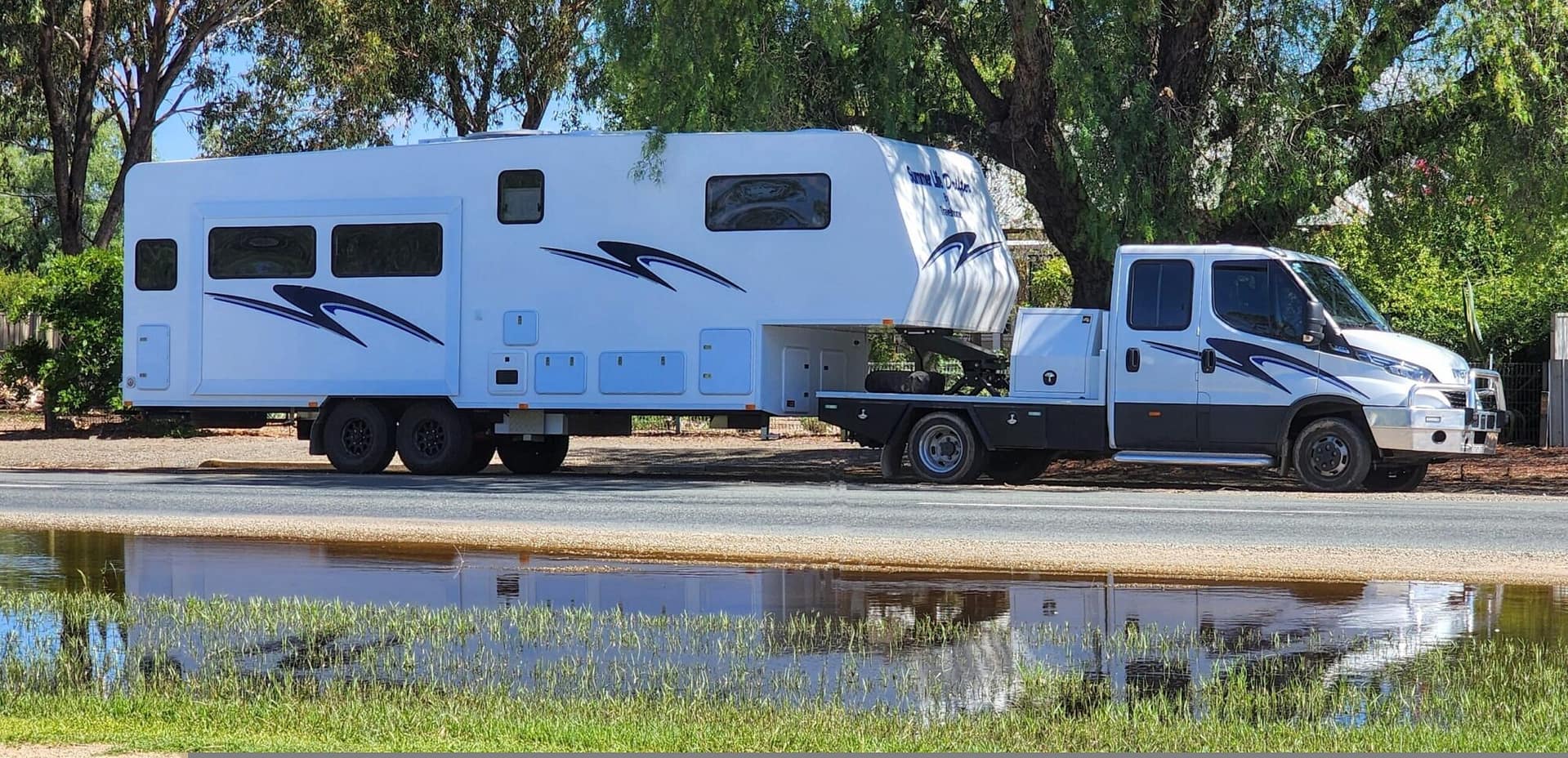
I saw them arrive, mate, in their yellow campervan, with the load of kids and the two dogs and all of them full of vulgar, youthful energy.

I was sitting in my old chair, with my old bait box and my old radio, my old fishing rod in its holder, and I was listening to the small talk of the waves when I heard the first alarming cry.

“Look. Mummy, at the funny man with the big guts.”

“Hush dear, he’s fishing Play sandcastles. Don’t tease, Mona DON’T TEASE”

Yes, I heard it all mate. It was like the doors of bedlam swinging open. The seagulls winced, and a small salmon trout fled seawards, its tail a blur of anxiety.

“Mummy. Shep’s gone up to the man’s chair.”

I was aware of a sudden warmth on the right leg, and I saw this small, urban canine, the maddened lust of seagull-chasing in its blood-lusting beady eyes.

The maddened lust of canine chasing came into mine like a red mist and my voice, quiet these past hours, went four-lettering over the astonished sandhills.

“Hullo, mate, Caught any, mate.”

It was the man from the camper- van, the sire of this decibilious progeny. He was Esky-carrying and the whole, atrocious brood was showing all he signs of pitching a beach umbrella within sinker shot.

Already a child, not yet sure on its limbs, was bellying its way forward, Its bright eyes fixed on the bait box and its nose dribbling with infantile intensity.

“There’s a nice little spot further along mate,” I said. “A small gnarled tree spills a sea-breezed shade, and the grass is right for a rug, mate.”

“She’s right mate. Like a bit of company. Want to see if you catch any, mate.”

He gave a hitch of his spectacularly brief trunks that clasped his lower midriff like lockjaw.

Why don’t you go, mate? My inner voice shrieked at him. Why come here, when the fishing channel comes close ashore Here, of all places, on a seven-kilometre beach.

The child was rapidly approaching my bait tin. I quickly ringed the tin with hooks and squid jags. The second dog approached my collapsible chair with its hind leg already at the hoist.

I drove it through mid-off with my rod holder.

“That’s Tiger,” said another child accusingly.

“And I’m Tyrannosaurus rex, mate,” I said, “and I crunch kidos.”

“I’m from Star Wars,” said the kid “Kerchow, bam, bam, bam.”

“Lookout for your swimsuit,” I said, or you’ll get a sea wasp in your belly-button.”

The woman had arrived now. She was young, had a hat, long hair and she had an enormous and ferocious aptitude for inciting her children into a frenzy of defiance. She was like one of the mythical Furies, with her hat, black sunglasses and her shoulder blades sirloined in the sun.

I didn’t care for mate.

The two dogs beg barking and the first dog looked headed in the direction of chair.

You got something your line, mister,” said a child.

Telling ME, mate.

Of course I had, scab face. There was a whole ocean on my line, great deeps and mighty chasms, huge fish with a mouthful of gut crushers, mate. And even peace, salvation for a man’s spirit, as if anybody would notice, mate.

“Everyone in the water,” shrieked the woman. In they went, the whole dreadful company, barking. leaping gurgling, bubbling. All over my fishing spot. Lashing it into foam. Disturbing the sand, squashing the jellyfish.

Even the baby was out there bubbling and squeaking.

For one moment, mate, I was thinking of putting on my heaviest sinker and my biggest hook. But who wants to hook spectacularly brief trunks or a sunburn-lotioned belly-button, or sirloined shoulder-blades.

“Catch anything mate they said later back at the little seaside town.

Well, in a way I did if you count a yellow campervan three kids, a bloke, his wife and a couple of incontinent dogs!

Mate!


Max Fatchen

Farewell to goodbyes

Have you noticed in this shrinking world how the art of the farewell has been knocked sideways?

When leisurely liners called at Outer Harbor (and we may see one or two in this new year) I made a practice of ingratiating myself with all my friends or their friends who might be travelling.

This entitled me to an hour or so of luxurious-what-might-have-been; strolling wide, white decks; inspecting lifeboats; riding up and down in the ship’s lift; having drinks; reclining in smoke rooms without smoking; sneaking into dining-rooms without dining, saying to prospective travellers that the Titanic went down because the iceberg slit her gut but not to worry, apart from old floating mines and uncharted reefs there was nothing really to worry them.

I was the last visitor to go ashore after stern warnings from pursers; quartermasters and third officers who hovered on gangway guard always knew me. The great dreamer, the passenger that-never-was.

They would wave a kindly farewell as the propellers churned and I screamed warnings about floating objects, aggressive whales and old mines.

And I would stand there until the ship was a white speck and the tugboats frothed their bows back to a cuppa at Port Adelaide.

There hasn’t been much activity lately. One can’t get much magic carpet kick out of farewelling a sheep ship or a container vessel with all its soulless boxes.

Oh, one can go and brood a little over the yacht squadron basin and think of sails like clouds and clean, aesthetic bows razoring St. Vincent Gulf or laying lanes of foam in Bass Strait.

One might even stand at the nearby boat ramp and scream with laughter when a trailer runs over somebody’s toe or watch those awful duels for landing rights.

Ships have passed; or most of them have, and I have nothing to farewell except people at the airport.

Planes are up and gone. The fareweller stands on what is called an observation deck which is railed and contained and where climbing children are eyed with terrible and watchful calm by security men.

There was a tranquillity, a heart-string-tugging privacy when one could stand on a wharf with all the crowd gone; when the streamers whipped around one’s feet like broken dreams; or the hot breath of a kiss from a girl who was an almost total stranger but who wanted to kiss anyway, lingered together with the sharp taste of the last drink.

Now one gets a hot swirl of aircraft smell; one feels sorry for children waving frantically at a haughty jet dwindling in the sky, its passengers already accepting magazines and looking for the drinks trolley; not caring for the wistful ants that are left in little Adelaide Airport with its international dreams.

Grounded, I sit with a lonely milkshake, dejected among the froth and wishing there was somewhere I could go to farewell someone.

Trains? Oh, I’ve seen people off on trains but they are always afraid I won’t leave their roomette in time. They hustle me away. The thought of my accidentally accompany ng them fills them with panic.

They escort me to the platform then scamper back to make mouths through the soundproof window and to use baffling sign language. I don’t understand a thing they’re saying or signalling.

They explode into an eruption of hands as the train pulls out. Then they fall back into their seats and begin discussing me.

But wait. A friend is leaving in his trailer boat from the St. Kilda ramp. I shall take a ribbon of streamer and throw it to him as he steams past the mangroves and the cockle beds while the romantic winds shuffle through Torrens Island vainly searching for a guitar or undulating hips or surf sound.

I shall squint at the tide bubbling and bearing a disposable can on its lip.

Then I will slink home and read the Outer Harbour tides and dream of great white ships and of flinging a streamer of passion from the yearning wharf.

So I’m restless with the hunger for far seas; for islands in the sun and long drinks in the shade, for poignant wharves and bands playing Harbour Lights.

That’s the way it always is for me during summer holidays.

And between Test matches.


Max Fatchen

Family drive for opulence

The tardy Arab sheik who was forced to pay $1.52m. for a hotel bill for a mere 50 rooms in Florida, shows that opulence is not dead.

It just takes a little longer to pay for it.

My days of opulence have vanished with the speed of dew from spring time grass but there were days when motels clamoured for the custom of my one-car caravan.

Certainly those were the days when staying at a motel was the acme of travel; when we swanky sultans of suburbia took our tribes to the family room after scanning the night for that caravanserai sign that blinked Vacancy.

Oh, the excitement of the en suite bathroom! The little cakes of soap crying out to be souvenired by ecstatic children! The oh-so-sanitised glasses enclosed in germ-free wrappers and the toilet seat with the impressive ribbon of paper across it proclaiming its purity!

We always cut the rib bon in a touching little ceremony and there was a furious scramble to be first to baptise this sanctum of sanitation.

Heady luxury

There was also the heady luxury of the personal electric water jug and the moment of revelation when the cupboard door was slid back to reveal the inimitable apparatus of tea-making, the tea-bags labelled and stringed, the coffee packets neat and souvenirable and the sugar that would join the great collection back home—the fruits of motel ransacking on a dozen highways

But I must say one felt a surge of opulence.

Everyone took turns to bounce on the beds, and if they had more spring and-give than others encountered it was duly noted in my wife’s travel diary, a kind of Rubaiyat of Roadside Residentials for the motel faithful.

There was the instructions and information folder to be read with growing excitement, with its panorama of the town’s life, the dry-cleaning centre, the Sunset tea rooms, directions to camping grounds, service clubs; its tourist pamphlets, gaudy and beckoning.

But wait, in this magic cave we had yet to consider the radio knobs controlling heavens knows what entertainment: piped music from the office; tapes and tracks to set me dancing in my underpants; the local stations crackling and crowing with homely commercials and country and western or the football teams for Saturdee.

And there would be the black-and-white television with just a bit of ghosting, two figures for the price of one but who cared when, the most riveting exercise of the day was about to take place: selecting break fast.

This became the centre piece of a family council.

No, you can’t have Coke for breakfast. Baked beans and bangers, really child.

Well, make up your mind. Yes, you can have my marmalade containers as a souvenir but only if I have your toast.

One had a feeling of togetherness over that breakfast sheet, what with children climbing on one’s back and shoving their heads under one’s arm to see that the right ticks were made.

Oh, the cereals in their little packets; oh, the eggs nestling beneath the metal lid, for motel breakfasts always arrived under metal lids, giving them an air of mystery.

Continual visits

But first there was the night. The continual visits to the toilet. Children with their heads against the wall to see whether anything naughty was going on in the next room. People wanting the air-conditioner on and off. Peering through the draped windows at the semi-trailers like lighted liners, dieseling down the insomniac high way.

Come to bed. Be quiet. Stop talking. Not the toilet again.

The magnificent lighting of the motel was desperately inviting. Bed- lamps and headlamps, buttons pressed.

Often I retired to the sanitised toilet for a little peace, peering out at my gasoline dromedary sleeping between the white lines designated for parking. I felt warm and secure and opulent until a voice, squeaky with urgency, said, “How long are you going to be there? I have to go.”

Morning broke behind the thick drapes. And then we heard it as a soldier hears reveille. The faint rattle of lids. The distant litany of breakfast, coming closer and closer. The whole family waited. The door knock. Two women bearing trays, a veritable colony of tin lids.

Oh, the wonder of the disclosures Butter in golden foil. Eggs with sunrise centres. Toast wrapped snug in tissue. Little packets of cereals. Should we eat or should we souvenir? There was a purposeful dividing of spoils, the dip and clink of spoons, grapefruit gone in one convulsive gulp, butter-spreading the bedspreads…

The radio announcer at the local station full of weather forecasts and dry-cleaning ads. And Slim Dusty singing.

Later we’d smuggle the dog out to the car as we’d smuggled it in the night before.

We’d nod to the people vacating the next unit and more than once they’d express concern about our children’s terrible colds.

“One poor dear barked all night,” they’d say.

And so we’d load the gasoline dromedary. farewelling the now thoroughly unsanitised toilet, making a last swoop on an envelope of sugar, raiding the letterheads. Our one night in a 1001 nights was over.

But as I looked back at the final devastation, to the talcum trails, the awful desolation of the breakfast trays, the beds that had erupted blankets, there was no doubt where our caravan had rested.

The radio still on, full volume… A child rushing past me for one last twinkle in the toilet.

And when I finally closed the door it always seemed a nice way to go… to the dying gush of gurgling water, the weather forecast and Slim Dusty singing.


Max Fatchen

It’s a hard act getting in on the act

You see, I’m rather hurt. Ronald Biggs, the Great Train Robber, is appearing in coffee commercials.

What’s more, elegant corgis speaking in royal accents are advertising dog food.

Kids are toughening their teeth. Cockneys are advertising furniture, bank managers are shifting it.

But for me, nothing.

What I want is an agent. What I want is the big time. As one agent said, I’m big but this isn’t the time.

But why not? Take white ants, for instance. I know all about termites. Two of them sit opposite me at breakfast.

Don’t think I haven’t tried. I said to one television casting director, “I’ve been screen-tested for several parts.”

“Listen, friend,” he said, “With your size, you should have been road-tested.”

I have always fancied myself in a biscuit commercial. Why shouldn’t I collect a few crumbs? Others make a packet.

I thought of auditioning as a weather man. Listen to this:

Hullo customers. Well, the only rain about is under the shower. Now let’s look at the satellite picture. Either this is a moist, tropical inflow or someone has spilt the coffee. Tides, fishermen? Well they’re in and out.

As you see, rain-lovers, I have all the patter even if I haven’t the pitter.

So my hopeless search goes on. I’ve even been thinking of joining one of those television safaris. They are usually in the tropics with hazy islands in the background and slim, sun-browned mermaids snorkelling across reefs searching for an old wreck.

Girls, look no further.

Another thing. The beautiful inquisitors of Nationwide haven’t quizzed me for a single segment. My wife says if it was called Openwide I’d stand a chance.

And I’m still waiting for word from Parkinson. I can see myself walking to the studio, down that elegant aisle, the orchestra playing and Parkinson rising, his rugged face creased by a thousand questions and nervously fluttering his first enquiry: For God’s sake, who let him in?

Nobody even wants me on 60 Minutes. Five is all they could stand.

Then there are those tile commercials. Why not me? I’ve been out on them often enough.

And certainly I’ve been. in talk shows. Ours never stops.

Then again I have fancied myself in a more dignified role. I come to the front of the screen, with my earnest expression and my gold-rimmed spectacles, and tell you where you can borrow money.

And then you ring me and tell me where I can.

I suppose I shouldn’t sit here wishing for the moon. Yet these advertisements are so sleek and glib. So persuasive. I’m sure I can radiate a certain confidence. People feel they can identify with me.

“That’s him,” they shout, racing their monthly accounts around to the studio.

I’ve even thought I could have a role introducing movies. Rolling west with Jesse and Stan James. Astairing into space and putting the ginger into Rogers.

You see, I’m witty, too.

In the scramble of big names and hot properties it’s easy to see I have been passed over, although passed in, my family thinks, is the more appropriate term.

So here I sit, my television possibilities untap ped and untaped, my interesting and inimitable face waiting to be animated.

If only Walt Disney was still with us!


Max Fatchen