Sumer is icumen in1, more sophisticated than ever.
Air-conditioners hum to cricket viewing in colour.
The neighbour contemplates his trailerboat cruiser, towering its fibreglass majesty (two outboards and echo sounder) above your grovelling hedge.
Upon the leisurely Murray, many-bunked houseboats bear friends getting away from it all as comfortably as possible.
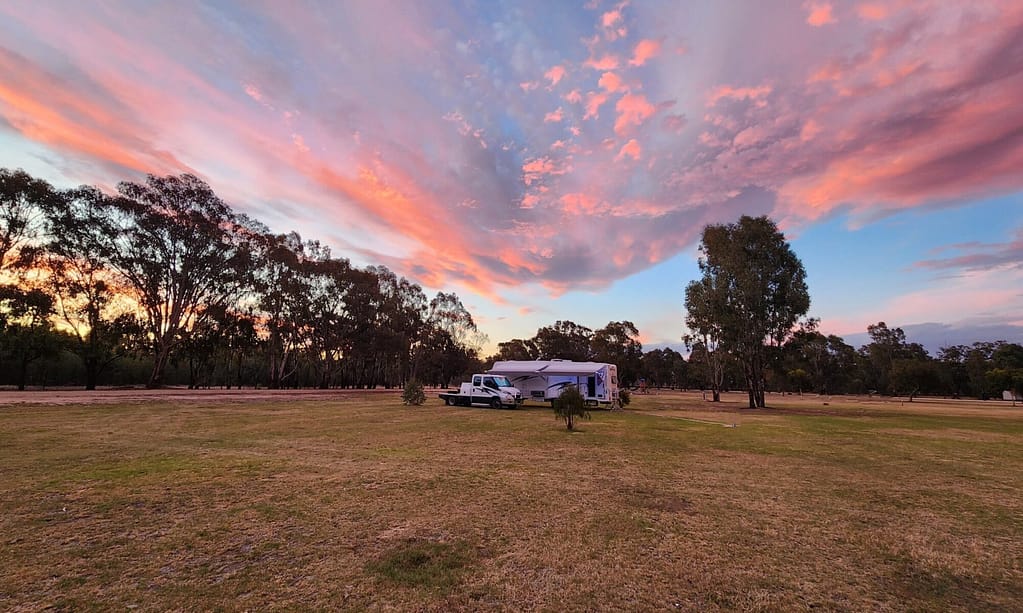
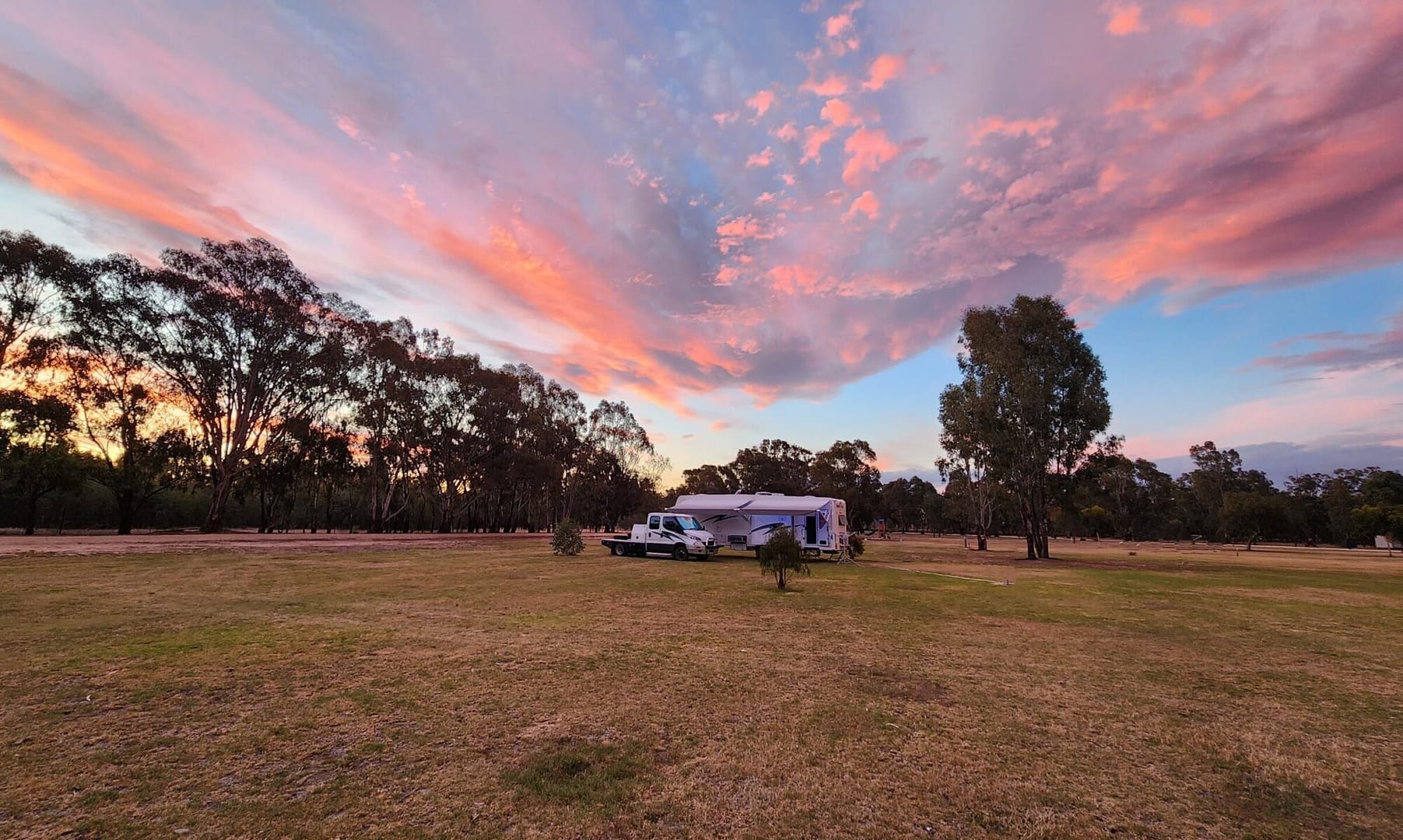
Caravans raise their collapsible roofs and outside sit collapsible people, collapsed into collapsible chairs and sipping drinks from collapsible tables.
Even campers have tents, suitable for Everest or the equator. Gold Coasters leave in their air conditioned cars, heading north the for Bjelke Belt and Capricorn’s wringing tropic.
How was it then in the pre-war, waterbag years when cars were singular and distances weren’t dwarfed and holidays were strictly intrastate.
The Victor Harbor guest house, that Taj Mahal of main course with a choice of two sweets, always notified you that your usual room is available, the one facing towards Granite Island which you could see if you stood tiptoe in the washbasin.
The dining room awaited you with matured cruets and cutlery with knives like mini-cutlasses.
The receptive toast racks were in readiness; the Quaker oats with hot or cold milk.
And there was no motel nonsense about en suite rooms.
The bathrooms were clean and functional and the corridors at bathing time full of a discreet flurry of dressing gowns, corridors where little Adelaide Plains voyeurs could glimpse the saucy glimpse of a fleeing lass, talced and sweet, heading back to her room.
So this was the call then: load the car for Victor.
Between you and Victor lay the Willunga Hill, that frowning escarpment that carcased cars at its roadside, bringing engines out in a veritable rash of steam and exertion.
Away then, luggage strapped on mudguards and running board: waterbag suspended from the bar in front of the radiator, tomato sandwiches in grease-proof paper; cold boiled eggs from the hens the neighbours would be minding along with the horses, the two eccentric cows that always had calves just before your holidays and the cockatoo, that old birdseed grump muttering rural obscenities between the eternal requests for drink.
Away then, past the reaped fields and stubbled paddocks, past haystacks constructed with architectural nicety, some with their ends rounded until they looked like great straw puddings; mansions of mice with a hawk in hovering attendance.
So to Willunga Hill, the old town at its foot and the cars panting up its winding purgatory.
You had a parent who knew his car and you went up gently but firmly, the lean tyres gripping the gradients, the air becoming thinner and the panorama more splendid in the sharp summer light…
Noarlunga’s cluster of buildings, the Onkaparinga’s kinky curves. Moana’s blue sea.
You passed a steaming car with its bonnet propped up like wings and people scurrying behind trees to answer the calls of tension and Nature.
Willunga Hill scaled and onwards then along a winding road and through the country of cows, past scrub where flights of parrots hurled bush invective.
The Bluff sighted, that symmetrical headland of a hill. Children were always threatening to roll down it, middle-aged people were always puffing up it.
Some climbed the Matterhorn, others tried Everest but climb the Bluff and you would see the bay that Frenchman Baudin saw, the bay where the whalers went, coves corseted with rock.
Great whales were out there in the Southern Ocean Sea-weary freighters with high stacks rode by, no container quadrangles of floating marine ugliness were these but honest-to-goodness tramps smoking down the sea lanes.
So the Bluff sighting was the official start of your holiday. Of course there were the arrivals, the unloading of the car, the gracious reception by the guest-house owner, the renewing of acquaintances with farming friends from Balaklava and sweet-sounding Tarlee.
People went by in optional sandshoes and compulsory panamas. Children scampered in sunsuits, already sunned in great red patches.
Even a country dog or two arrived to be domiciled by the understanding mine host in the guest room yard.
We always bring old Shep. Couldn’t leave old Shep home. Shep grinning with a faint hint of old bones on his gusty breath
And so to the horse-drawn tram car to the island. Come with me, rose of Tarlee, and we will climb the winding steps and sit on the upper deck while the slow horse plods seawards and, beneath the jetty, the slow sea plods to the shore.
Look, Granite Island, old rocks and young loves, a kiosk with scones and strawberry jam; the screwpile jetty with non-communicative fisherfolk. And the breakwaters, enormous structures reprimanding the boisterous
Let’s sit on a seat where the spray sometimes comes so thatyou can squeal and seek the sanctuary of my immature arms.
So it went on; the sea performing for visitors, sweeping enormous furrows to the unbending rocks. The lighthouse on the summit, opening its one eye at dusk.
But you would be on the main land by then, seeing the sideshows, rolling red balls along green baize into numbered holes; hurdy-gurdying around a mirrored central blaze of mirrors, upon painted horses, the hurdy-gurdy engine snuffling and chugging and the music swirling waltzes to the slumbering seagulls on the rocks.
Then it was a late-night pasty and a bottle of lemonade on the seafront, the lights of outpost Port Elliot winking on their rocky headland, the waves sending up white ghosts of spray.
Next morning the traditional boating on the Hindmarsh River. You sat at the oars and she sat steering with shrieks of indecision.
This reedy river was mirror calm, with sideburns of bushes and aisles of rushes which the wind touched until the whole river was whispering.
Of course you ran into the bank and once your oars scooped thin air and you fell on your back and she laughed and a disturbed swan, aerodynamic grace in black and white, shifted to where young country folk wouldn’t bother it.
There was a small pavilion on a rise by the river, a salon of fruit salad. You rested there while the river glinted below, an oar splashing here and a boat’s bow sliding there.
“We’ve got 600 acres on our farm,” the rose of Tarlee said, looking at you thoughtfully, “what have you got?”
“A couple of hundred but we’re hay growers.” you replied defensively.
“Spiders for two,” you said, trying to turn her calculating thoughts from unsuitable comparisons.
Ah, those spiders, beautiful drinks of ice cream and lemonade, frothing madly so that you sucked their creamy bubbles until your ecstasy bent the overloaded straw.
It was all a beautiful day. The sun went down and later you held hands in the Soldiers Memorial Garden under the Norfolk Island pines.
The hurdy-gurdy came alive with its galloping tunes
They weren’t exactly love songs but to a young ear at Victor Harbor in a pre-war summer they were near enough.
Max Fatchen